

Key Takeaways
- The Project Management DBA is designed for professionals who want to blend research with management practice.
- Online and blended learning make it possible to study without leaving your job.
- Effective time management is crucial to balancing work, study, and life.
- Research topics can be linked directly to your firm or industry.
- The program builds strategic thinking, leadership, and decision-making skills.
Getting a Doctorate in Business Administration in Project Management as a part-timer is not easy. However, it is doable if you have a good plan.
Whereas other academic courses emphasize theoretical research, a doctorate entails practical research aimed at solving real-world business problems. Balance should be maintained.
What Is a DBA in Project Management?
A DBA in Project Management is a professional doctorate that focuses on using research to enhance organizational performance, governance, leadership, and project delivery.
It is suitable for individuals who:
- Are involved in project or program management
- Want to transition into a leadership or consultancy position
- Seek to influence strategic thinking and decision-making
- Are interested in applied research rather than theoretical research
Contrary to a PhD, a DBA is more concerned about addressing business challenges than generating academic theory.
Why Choose a DBA While Working Full-Time?
There are many reasons working professionals prefer a DBA without resigning from their job:
- Applying learned knowledge in practice right away
- Earning while learning
- Real-world experience strengthens your research
- Career and educational development happen simultaneously
Working professionals often perform more effective research because they have practical experience with the industry problems they’re studying.
Step-by-Step Guide to Completing a DBA While Working
1. Select the Right Program
- Offered online or hybrid
- Has flexible deadlines
- Features supportive faculty
- Has an industry-based curriculum
This is essential to managing your time between work and studies.
2. Match Your Research With Your Work
The best strategy is aligning your DBA research with your job. Examples:
- Increasing project management efficiency
- Exploring leadership in agile management
- Examining risk management models
This makes your studies less of a burden on your schedule.
3. Formulate an Achievable Study Plan
- Allocate specific hours for studying
- Divide your research into achievable goals
- Utilize weekends properly
- Steer clear of last-minute deadlines
Discipline matters more than dedication alone.
4. Become Proficient at Time Management
- Time-blocking (study, work, and social time)
- Prioritization with a task matrix
- Reducing distractions
- Weekly goal setting
Without time management skills, even the most well-formulated plans won’t work.
5. Communicate With Your Employer
If possible, let your organization know about your DBA. Advantages include:
- Possible flexibility in your work schedule
- Applying research findings within the organization
- Assistance in collecting data
- Sponsorship or financial assistance
Most organizations appreciate employees who pursue higher education.
6. Stay Consistent With Research Work
Research is often the hardest part. Tips for staying consistent:
- Write often, rather than in bursts
- Keep your notes organized
- Stay in regular communication with your mentor
- Avoid extended breaks
Problems Faced (And Solutions to Them)
1. Shortage of Time
Solution: Proper time management
2. High Workload
Solution: Study during off-peak work periods
3. Difficult Research Topic
Solution: Select a topic within your area of expertise
4. Reduced Motivation
Solution: Set realistic goals and reward yourself
Benefits of Completing a DBA While Working
- Improved leadership skills
- Increased credibility for upper management positions
- Entry into consultancy
- Greater earning potential
- Influence on organizational decision-making
This positions you as a thought leader rather than just an executive.
When Is This Path For You?
This path is suitable if you:
- Have experience with project or program management
- Can manage your time well
- Are disciplined and goal-oriented
- Are looking for long-term career advancement
- Prefer practice over theoretical knowledge
It may not be the right choice if you are early in your career or unable to dedicate consistent time.
Keep in Mind
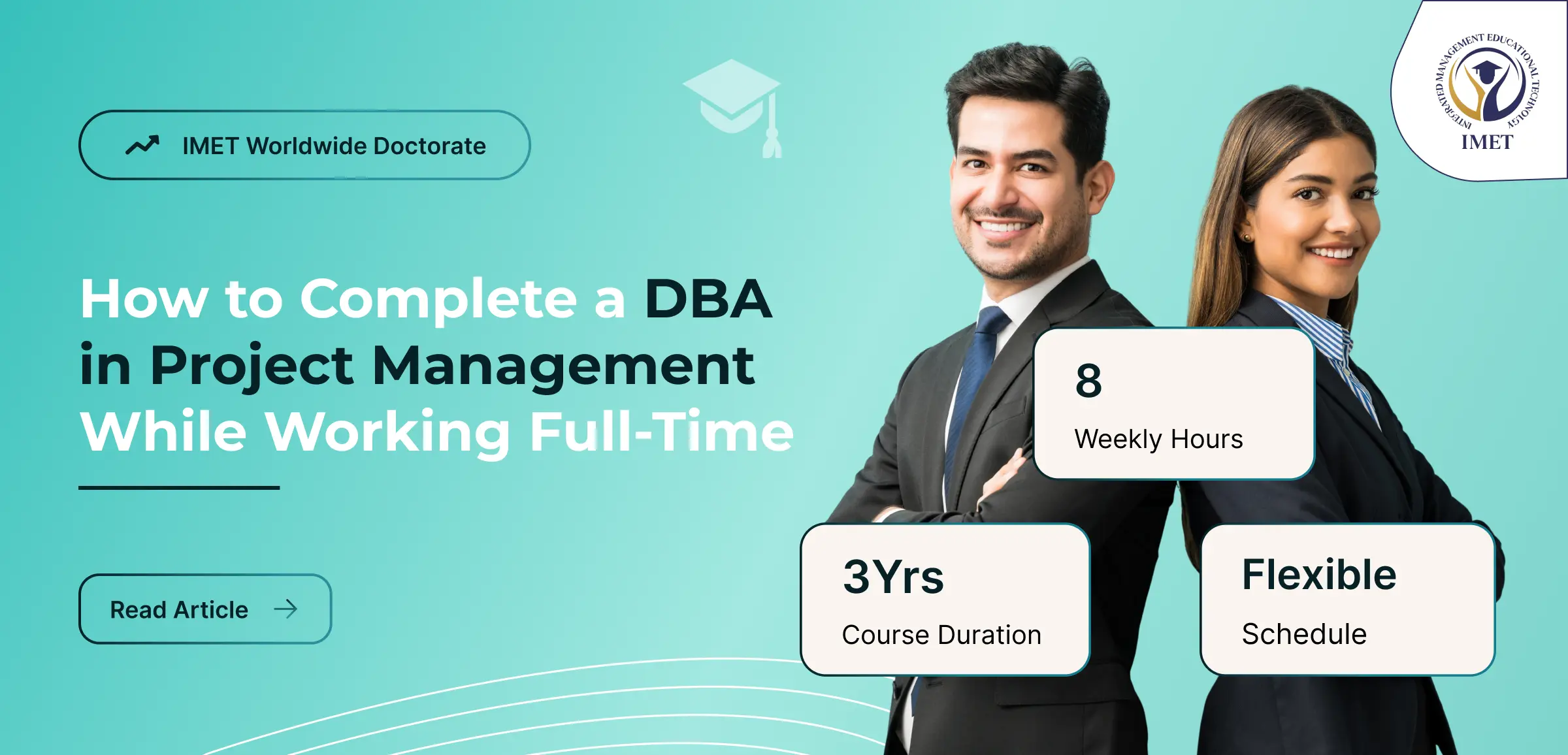
- The DBA process requires patience (3–5 years)
- Willingness to work hard matters more than natural ability
- Selecting the appropriate topic is critical
- Having a support network is important
- Progress will come slowly but surely
Final Verdict
Undoubtedly, earning a DBA in Project Management as part of a full-time career is challenging yet very fulfilling.
It gives individuals the opportunity to further their education while maintaining their careers, while making valuable contributions to their field. With proper planning and focus, it becomes something remarkable.
For individuals aspiring to reach managerial, consultative, or executive positions, a DBA can make all the difference.
Frequently Asked Questions
1. Can you earn a DBA while employed full-time?
Yes, most DBA courses are designed specifically for this purpose.
2. What is the duration of earning a DBA?
It ranges from 3 to 5 years, depending on the individual case.
3. Is it worthwhile to study a DBA in Project Management?
Absolutely — it can be highly beneficial for career advancement.
4. Is a DBA harder than a PhD?
Both are difficult to obtain, but a DBA has a more applied nature of research.
5. Will employers appreciate your DBA?
Certainly — this degree gives you a strategic advantage at work.