

Suppose a professional is working in IT or security with 5 to 10 years of experience, handling technical responsibilities but aiming to move into leadership roles. There is strong domain knowledge, but limited exposure to business strategy, risk management, and decision-making at a higher level.
In 2026, this is why many professionals are choosing an MBA in Cybersecurity. It is not just a technical upgrade—it is a strategic qualification that combines business management with cybersecurity expertise.
Organizations today need leaders who can manage cyber risks while aligning security strategies with business goals. This has made MBA in Cybersecurity a valuable career investment.
What is an MBA in Cybersecurity
An MBA in Cybersecurity is a specialized management program that combines business administration with information security and risk management.
It focuses on:
- Cybersecurity strategy and governance
- Risk management and compliance
- Business leadership and decision-making
- IT security management
- Data protection and privacy laws
This program prepares professionals for leadership roles rather than purely technical positions.
Why cybersecurity leadership roles are in demand
The rise in cyber threats, data breaches, and digital transformation has increased the need for skilled cybersecurity leaders.
Key reasons include:
- Growing dependence on digital systems
- Increase in cyberattacks across industries
- Strict data protection regulations
- Need for business-aligned security strategies
Companies are now looking beyond technical experts. They need professionals who can lead teams, manage risks, and make strategic decisions.
Career growth after MBA in Cybersecurity
An MBA in Cybersecurity helps professionals move from technical roles to managerial and leadership positions.
Career progression includes:
- Transition from analyst to manager
- Entry into strategic decision-making roles
- Leadership in cybersecurity teams
- Opportunities in global organizations
It bridges the gap between technology and business, which is essential for senior roles.
8 key career roles after MBA in Cybersecurity
Professionals can explore multiple career paths after completing the program:
- Cybersecurity Manager
Leads security teams and manages organizational security strategies - Information Security Manager
Responsible for protecting company data and systems - Risk and Compliance Manager
Ensures adherence to regulatory standards and manages risks - Chief Information Security Officer (CISO)
Handles overall cybersecurity strategy at an executive level - IT Risk Consultant
Advises organizations on managing cyber risks - Security Operations Manager
Oversees daily security operations and incident response - Data Protection Officer
Ensures compliance with data privacy laws - Cybersecurity Consultant
Provides expert advice to organizations on security frameworks
Salary insights and earning potential
Salary after an MBA in Cybersecurity depends on experience, location, and role.
Average salary insights in 2026:
- Entry-level (0–3 years post-MBA): ₹8–15 LPA
- Mid-level (3–8 years): ₹15–30 LPA
- Senior-level (8+ years): ₹30–70+ LPA
Global salaries are significantly higher, especially in regions like the US and Europe.
Factors influencing salary include:
- Industry demand
- Leadership responsibilities
- Certifications and experience
- Organization size
Professionals with both management and cybersecurity expertise are among the highest-paid in the IT sector.
Skills gained through MBA in Cybersecurity
This program develops a combination of technical and managerial skills:
- Cyber risk assessment and management
- Strategic decision-making
- Leadership and team management
- Knowledge of compliance frameworks
- Business continuity planning
- Communication and reporting skills
These skills are essential for leadership roles in cybersecurity.
Industry demand and future scope
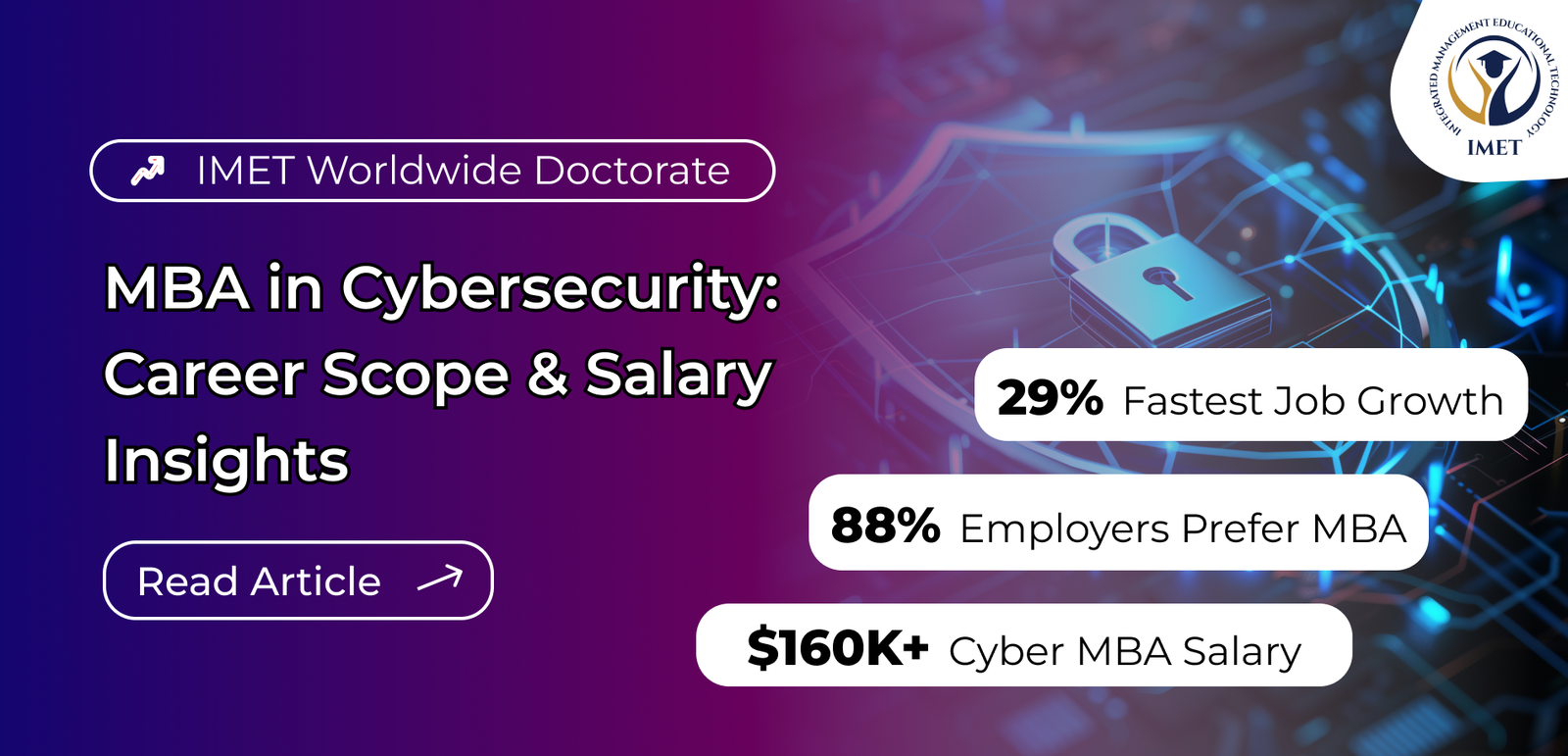
Cybersecurity is one of the fastest-growing industries globally.
Demand is driven by:
- Increasing cyber threats
- Expansion of cloud computing
- Growth of AI and digital technologies
- Regulatory requirements for data protection
Future scope includes:
- Leadership roles in multinational companies
- Consulting opportunities
- High demand across industries like finance, healthcare, and IT
- Continuous career growth and stability
In 2026 and beyond, cybersecurity leadership will remain a critical business function.
Choosing the right MBA in Cybersecurity program
Selecting the right program is important for career success.
Consider:
- Accreditation and reputation
- Curriculum aligned with industry needs
- Flexibility (online or hybrid options)
- Faculty expertise
- Placement and career support
A well-structured program helps professionals gain both knowledge and career opportunities.
Conclusion
An MBA in Cybersecurity is more than just a degree. It is a pathway to leadership in one of the most critical domains of the modern world.
As organizations continue to face complex cyber risks, the need for skilled professionals who understand both business and security is growing rapidly.
This program enables professionals to move beyond technical roles and step into strategic positions with higher responsibilities and better salary prospects.
In 2026, choosing an MBA in Cybersecurity is a smart decision for individuals aiming for long-term career growth, leadership roles, and financial advancement in a highly competitive global environment.